Seven Masters (part three): is Cthulhu one of the seven masters?
Friday, March 5th, 2010Continuing on in our meandering diversion from a conversation about the Shinshu Seven Masters, this episode starts right where we left off last time in a conversation about the promises and pitfalls of “one Buddhism” or a universal religion. The underlying issue here has to do with problems of difference or “otherness,” something that we somehow manage to relate both to post-colonial theory and Mahayana philosophy. (No. Really.) In post-colonial theory we find the urge to both deify and demonize the other (which has particular implications for Buddhism’s transmission to the West); and in Mahayana we find a tension in the perennial debate between the complete otherness of nirvana from samsara versus the form-is-emptiness stance of the simultaneity of nirvana and samsara. And believe it or not, all of this actually brings us back to Genshin — one of the Seven Masters of Shin Buddhism! But don’t worry, we don’t linger there too long; we’re still pretty caught up on Cthulhu and Aliens.
Speaking on Aliens, don’t forget to check out our website for more information on our upcoming live recording in April.
Podcast: Play in new window | Download (Duration: 23:19 — 26.7MB)
Listener question: where is the Vow?
Friday, February 5th, 2010Inspired by a conversation amongst fans on our Facebook page, we take up the issue of vows in Buddhism. Obviously, we need to start with how vows are understood specifically in the Mahayana context, especially Bodhisattva vows. But these aren’t the only types of vows in Buddhism, and we discuss different types of vows. Some are almost future tense (things we’re promising to do) whereas other are definitely past-tense — especially the vows that Dharmakara Bodhisattva made before he became Amitabha Buddha. These vows set up a karmic mechanism by which all sentient beings are able to enter the bodhisattva path and attain Buddhahood. So, where is the vow? It’s the question we try and tackle in this first episode of 2010.
Podcast: Play in new window | Download (Duration: 31:27 — 36.0MB)
Live show part three: abortion and shinjin
Friday, November 20th, 2009In part of three of the live show series, our first question has to do with Shin Buddhism’s stance on aborted fetuses. Scott cleverly ducks the question but Harry provides some interesting insight into the Japanese ritual of mizuko kuyo (water baby ceremony) and the efficacy of ritual in Shin Buddhist context. Our second question is the ever-popular, if you had shinjin, would you know? Or, more specifically, given our deluded state as foolish beings, is it even possible to attain shinjin in this life. We both say yes (doctrinally, it has to be possible!), but provide some nuance to what shinjin is all about in the first place — a process, a relational state between the self and Amida’s compassion, like being in love — and we round it off with a good discussion of Shin Buddhism being a Buddhism of failure.
Podcast: Play in new window | Download (Duration: 24:10 — 27.7MB)
Live show part two: rants
Friday, November 6th, 2009In the second installment of our Live Show, we start off talking about the distinctiveness of Shin Buddhism and its difference and similarities to other types of Buddhism. This somehow sets us off on a series of rants against, among other things, The Golden Chain and universalistic Buddhism. (Our apologies to Golden Chain or One Dharma fans out there!) These rants serve a purpose, though, and that is to challenge us to wrestle with difficult questions; it’s this wrestling that allows for spiritual growth, after all. And after these rants, we got our first audience question, a question about stereotypes we come up against as Buddhists. This, of course, sets us off on a couple of new rants about, among other things, Shin Buddhism being not “real” Buddhism and inter-sectarian name calling.
Podcast: Play in new window | Download (Duration: 25:57 — 29.7MB)
Listener question: where are all the bodhisattvas?
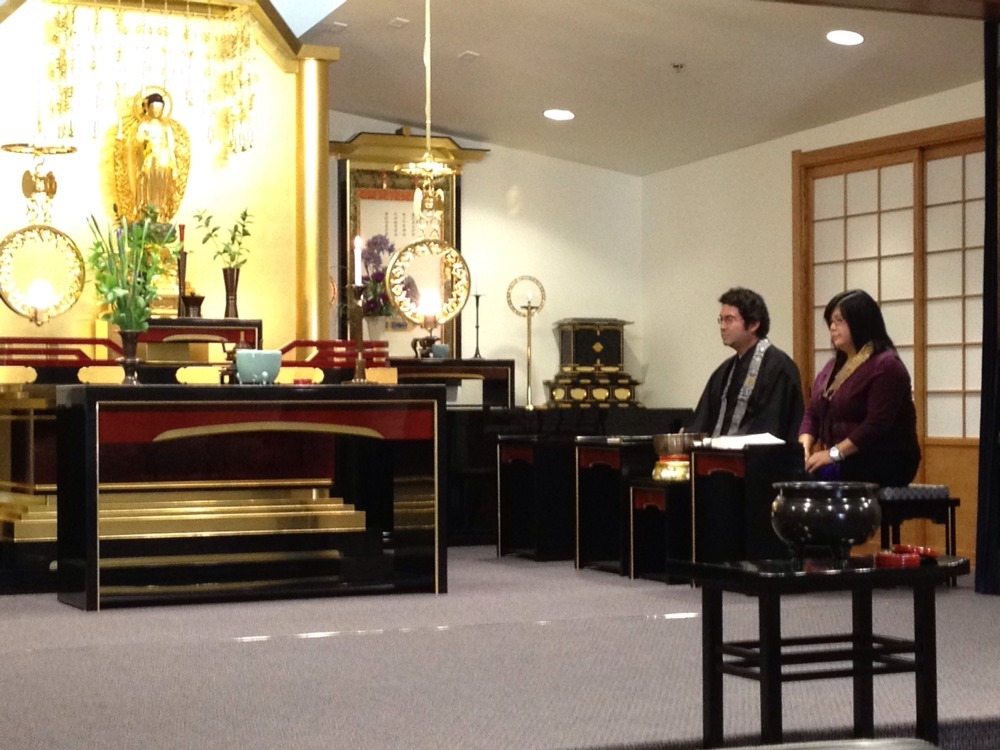
Friday, September 18th, 2009A listener writes in with an extremely interesting question: if Jodo Shinshu claims that when you go to the Pure Land you come back to this world as a bodhisattva, where are all these bodhisattvas?! This begs a lot of questions and raises a lot of issues about Jodo Shinshu Buddhism with the most obvious being, what is a bodhisattva? We can think of them as “Buddhas in training,” real sentient beings doing specific actions; but we can also think of them as “cosmic” or semi-spiritial beings, maybe working behind the scenes. But Harry points out that according to Shinran, birth in the Pure Land leads not to bodhisattva-hood — but to fully enlightened Buddhahood! That, of course, begs the question of, well, where are all the Buddhas? So we do our best to talk about how we can understand these teachings and put them into practice in our everyday lives in both spiritual and practical terms.
Podcast: Play in new window | Download (Duration: 24:38 — 28.2MB)
Listener question: Shin Buddhist practice
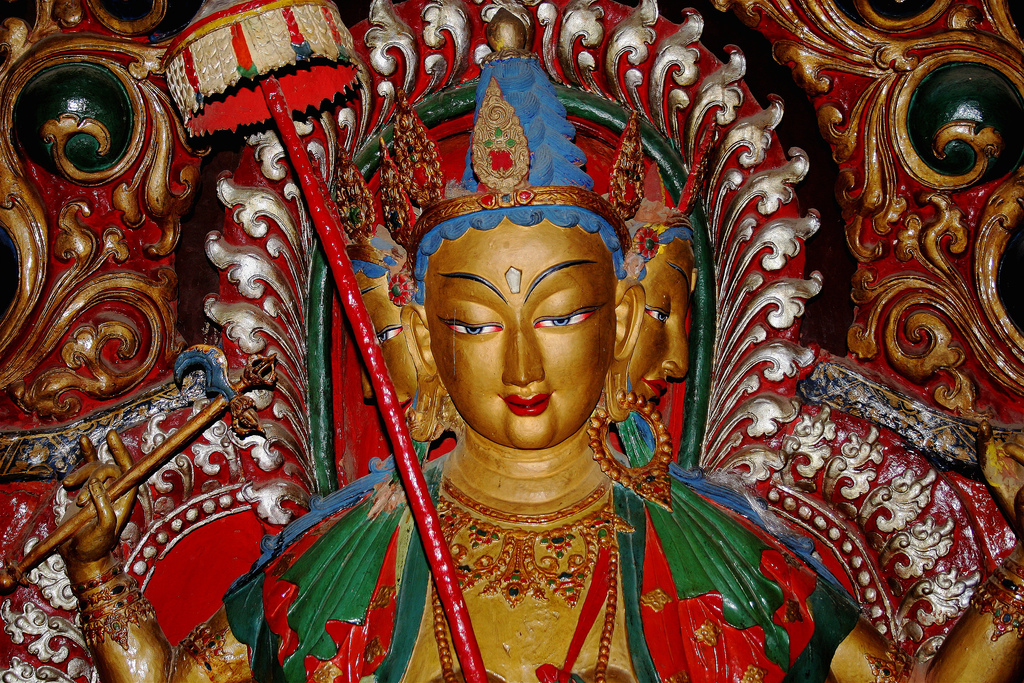
Friday, May 1st, 2009This time around we respond to a listener question about Shin practice, an issue we’ve tried to tackle before, and one that we’re likely to tackle again. Shin practice raises some complex, doctrinal issues. S we begin with a look at Shan Dao’s Five Practices which include, of course, reciting the name of Amida Buddha. But this issues is not as straightforward as one might expect; is it an exclusionary practice? Or is it alright to do other types of Buddhist practice? Or, as Shinran suggests, is it even possible to practice? Or are we not practicing at all except when we hear the Name being recited by the Buddhas? We meander through all these tricky issues before coming to, of all places, a translation of Shinran’s work by D.T. Suzuki and suggest that Shin practice is to live your life, and in that living reflect on your self, your actions, and your thoughts.
Some helpful resources for this episode include our past reflections on Shin practice which can be found here:
Podcast episode on practice
As well as the Collected Works of Shinran which are available online here:
Collected Works of Shinran
Podcast: Play in new window | Download (Duration: 32:52 — 37.6MB)
Listener questions: practice
Friday, October 17th, 2008In our first “listener response” episode, we tackle the question of how to practice Shin Buddhism (or any kind of Buddhism) if you don’t live near a community. Our take on the issue begins, appropriately enough, on the Internet and how the Web can be a great source of information. But, of course, the Web isn’t always so great in creating human connections, and often the Web is little more than a place to read stuff. Reading isn’t for everyone, after all, so we suggest practicing the recitation of the nembutsu (namo amida butsu), constructing an altar (or butsudan) and of course seeking out good spiritual friends (or kalyanamitra).
If you’ve got a question, feel free to drop us a line either through the site or our Facebook page, and we’ll do our best to answer in a future episode.
Mentioned in this episode is the very good web resource, Shin Dharma Net, maintained by Prof. Alfred Bloom at ShinDharmanet.com.
Podcast: Play in new window | Download (34.6MB)
the Buddha: part two
Friday, June 20th, 2008Our second conversation on the Buddha, and what “the Buddha” means, we begin by talking about the Buddha in a specifically Pure Land Buddhist context. In particular we talk about Shinran’s take on the Buddha, Dharmakara, and Amida. Shin Buddhist thought is both a part of Mahayana thought and somehow separate. We explore some of these complexities of Shin thought before concluding with a reflection on our sometimes too-strong attachment to our founders.
Podcast: Play in new window | Download (39.8MB)
the Buddha: part one
Friday, June 6th, 2008What is the buddha? What are the ways people have conceived of the Buddha? Was he just a person? Teacher? Doctor? Historical figure? A transcendental super-human soteriological reality? All of these and more?! These are but some of the questions we raise in our discussion of the Buddha. Siddhartha Gautama, the eternal Sakyamuni Buddha, Buddha-bodies (that’s the nirmanakāya, sambhogakāya, and Dharmakāya), and even Jesus Christ come up in this episode of the DharmaRealm. And don’t forget to listen to the next episode where this conversation turns toward Shin Buddhist conceptions of the Buddha.
Podcast: Play in new window | Download (37.7MB)