Live show part two: nembutsu and music
Friday, May 7th, 2010In the second installment of our live show, we answer two listener questions. First, we received a question about Shin Buddhist nembutsu practice and the concern that chanting the nembutsu might be something of a crutch, that while making one more calm it might distract us from very real world social problems. We frame this in a conversation about the middle way, the path between extremes of self-doubt and self-indulgance, and how difficult it is to actually walk that path. Our second question came in via Twitter during the live broadcast and was about, generally, the appropriateness of translating Japanese gathas, songs, or chants into English. We focus mostly on the music side the question, exploring the appropriateness of ease of setting English language songs to traditional Japanese musical styles (or vice versa).
Podcast: Play in new window | Download (Duration: 26:13 — 30.0MB)
Seven Masters (part three): is Cthulhu one of the seven masters?
Friday, March 5th, 2010Continuing on in our meandering diversion from a conversation about the Shinshu Seven Masters, this episode starts right where we left off last time in a conversation about the promises and pitfalls of “one Buddhism” or a universal religion. The underlying issue here has to do with problems of difference or “otherness,” something that we somehow manage to relate both to post-colonial theory and Mahayana philosophy. (No. Really.) In post-colonial theory we find the urge to both deify and demonize the other (which has particular implications for Buddhism’s transmission to the West); and in Mahayana we find a tension in the perennial debate between the complete otherness of nirvana from samsara versus the form-is-emptiness stance of the simultaneity of nirvana and samsara. And believe it or not, all of this actually brings us back to Genshin — one of the Seven Masters of Shin Buddhism! But don’t worry, we don’t linger there too long; we’re still pretty caught up on Cthulhu and Aliens.
Speaking on Aliens, don’t forget to check out our website for more information on our upcoming live recording in April.
Podcast: Play in new window | Download (Duration: 23:19 — 26.7MB)
Listener question: where is the Vow?
Friday, February 5th, 2010Inspired by a conversation amongst fans on our Facebook page, we take up the issue of vows in Buddhism. Obviously, we need to start with how vows are understood specifically in the Mahayana context, especially Bodhisattva vows. But these aren’t the only types of vows in Buddhism, and we discuss different types of vows. Some are almost future tense (things we’re promising to do) whereas other are definitely past-tense — especially the vows that Dharmakara Bodhisattva made before he became Amitabha Buddha. These vows set up a karmic mechanism by which all sentient beings are able to enter the bodhisattva path and attain Buddhahood. So, where is the vow? It’s the question we try and tackle in this first episode of 2010.
Podcast: Play in new window | Download (Duration: 31:27 — 36.0MB)
Live show part four: marriage and politics
Friday, December 4th, 2009In the final episode of our first live broadcast, we tackle more audience questions. To get things started, we field a question about the BCA’s official position on same-sex marriage (a big shout out to Rev. Briones’ officiating at the wedding of George Takei and Brad Altman!). This bounces us around some questions regarding BCA’s political opinions more generally which is hard to pin down with such a large, internally diverse organization. And from there we segue into a conversation about how we got interested in Buddhism and the religious backgrounds we were raised in. Not surprisingly, this takes us back to the earlier question about basic Buddhism the value basic Buddhism can have when you’re just starting out on the Buddhist path.
We’d like to thank everyone who helped up pull off our first live show. And you can be sure that there will be more live events in the new year!
Podcast: Play in new window | Download (Duration: 21:34 — 24.7MB)
Live show part three: abortion and shinjin
Friday, November 20th, 2009In part of three of the live show series, our first question has to do with Shin Buddhism’s stance on aborted fetuses. Scott cleverly ducks the question but Harry provides some interesting insight into the Japanese ritual of mizuko kuyo (water baby ceremony) and the efficacy of ritual in Shin Buddhist context. Our second question is the ever-popular, if you had shinjin, would you know? Or, more specifically, given our deluded state as foolish beings, is it even possible to attain shinjin in this life. We both say yes (doctrinally, it has to be possible!), but provide some nuance to what shinjin is all about in the first place — a process, a relational state between the self and Amida’s compassion, like being in love — and we round it off with a good discussion of Shin Buddhism being a Buddhism of failure.
Podcast: Play in new window | Download (Duration: 24:10 — 27.7MB)
Live show part two: rants
Friday, November 6th, 2009In the second installment of our Live Show, we start off talking about the distinctiveness of Shin Buddhism and its difference and similarities to other types of Buddhism. This somehow sets us off on a series of rants against, among other things, The Golden Chain and universalistic Buddhism. (Our apologies to Golden Chain or One Dharma fans out there!) These rants serve a purpose, though, and that is to challenge us to wrestle with difficult questions; it’s this wrestling that allows for spiritual growth, after all. And after these rants, we got our first audience question, a question about stereotypes we come up against as Buddhists. This, of course, sets us off on a couple of new rants about, among other things, Shin Buddhism being not “real” Buddhism and inter-sectarian name calling.
Podcast: Play in new window | Download (Duration: 25:57 — 29.7MB)
First live show: a certain reality
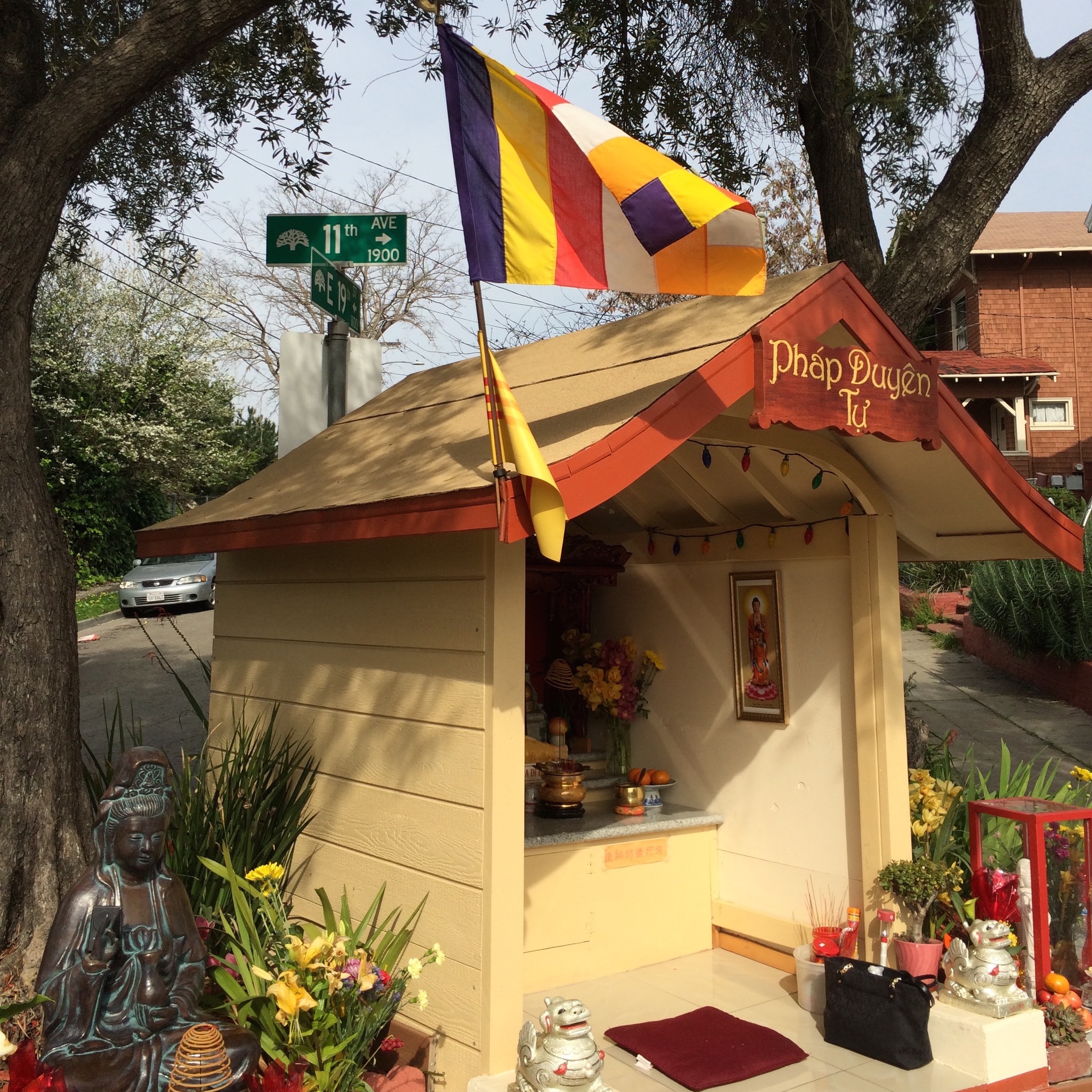
Friday, October 16th, 2009On Friday October 2, we did our first recording before a live studio audience. Setting up in the Kodo of the Jodo Shinshu Center, Harry and I did a little live mixing of our theme music before launching into a regular podcast, this one inspired by a listener question. The question? What’s the Pure Land? No easy task, of course, and our answers — even before a live audience — had our usual meandering quality, touching on such issues as where is the Pure Land, when are we born there, and most importantly, what’s the point of being born in the Pure Land? (Hint: it’s to do Buddha-work here in this world.) This episode’s catch phrase was that the Pure Land has a certain reality which forces us to question our practice and our path.
The live recording went on for a good couple of hours, so we’ll have more episodes from this one event. And this was certainly not the last time we’ll be recording before a live audience. So be sure to check the website or our Facebook page for updates.
Podcast: Play in new window | Download (Duration: 25:37 — 29.4MB)
Listener question: where are all the bodhisattvas?
Friday, September 18th, 2009A listener writes in with an extremely interesting question: if Jodo Shinshu claims that when you go to the Pure Land you come back to this world as a bodhisattva, where are all these bodhisattvas?! This begs a lot of questions and raises a lot of issues about Jodo Shinshu Buddhism with the most obvious being, what is a bodhisattva? We can think of them as “Buddhas in training,” real sentient beings doing specific actions; but we can also think of them as “cosmic” or semi-spiritial beings, maybe working behind the scenes. But Harry points out that according to Shinran, birth in the Pure Land leads not to bodhisattva-hood — but to fully enlightened Buddhahood! That, of course, begs the question of, well, where are all the Buddhas? So we do our best to talk about how we can understand these teachings and put them into practice in our everyday lives in both spiritual and practical terms.
Podcast: Play in new window | Download (Duration: 24:38 — 28.2MB)
Seven Masters (part one): Nagarjuna
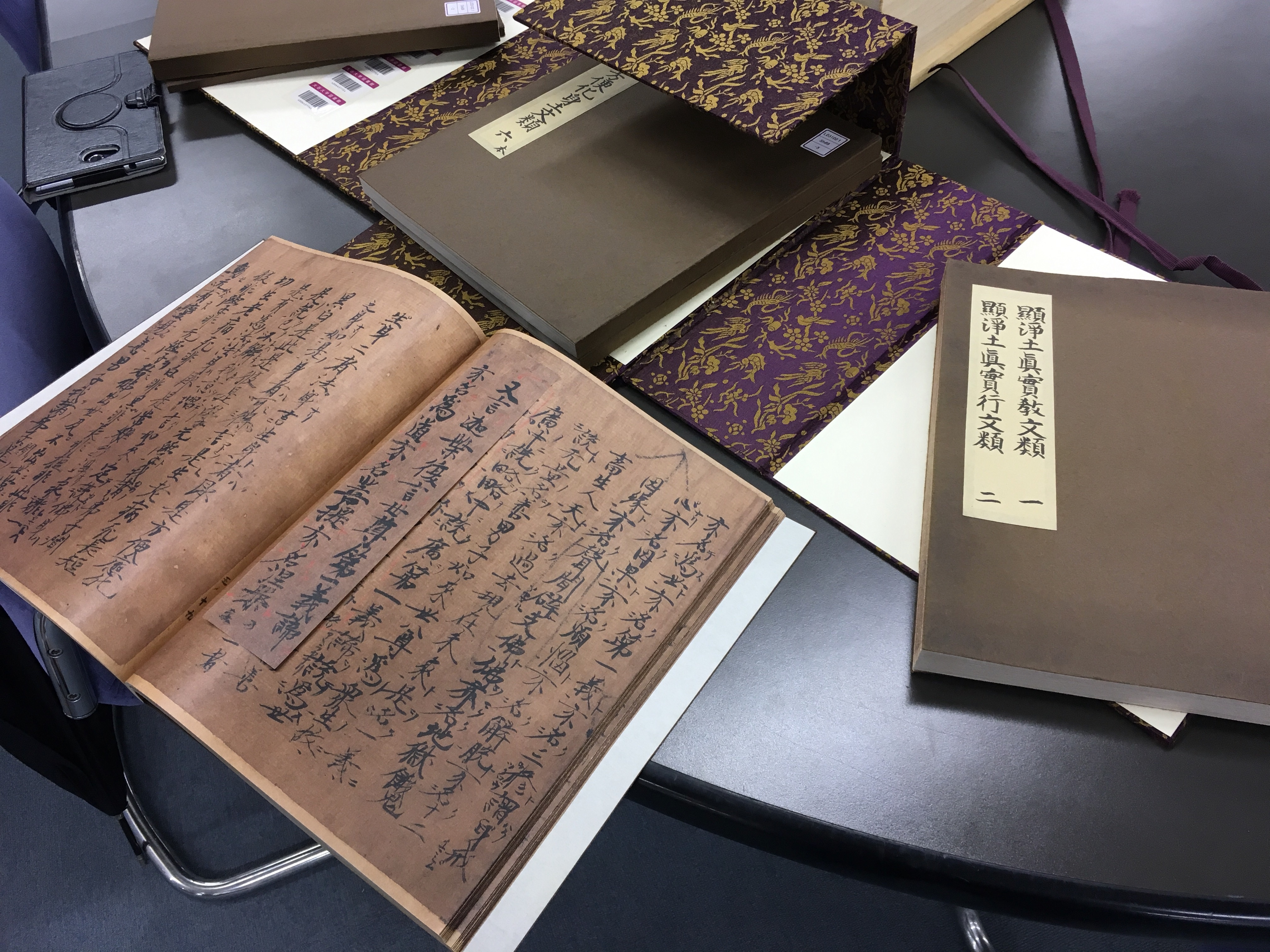
Friday, June 19th, 2009Once again, we take our inspiration from you, our listeners! One of our Facebook fans asks about the Seven Pure Land Masters, so we take up the cause with what may be the beginning a seven-part series. In this episode, we talk about Nagarjuna, a seminal figure whose twin concepts, emptiness (śunyata) and the two truths theory, are foundational for the development of Mahayana Buddhism. These conceptions of reality fit squarely within in the wisdom tradition of Buddhism more generally, and we can see a relationship between the ideas of the ultimate truth being beyond language and the inconceivable nature of Amida Buddha. Shinran writes in the Kyogyoshinsho that Nagarjuna was born to “crush the views of being and nonbeing,” which suggests that he was aware of Nagarjuna’s emptiness theories. And of course there is the ever important statement of Nagarjuna that the Pure Land Path is the “easy path” of practice. We talk about all of this and more in this week’s episode.
For some background, here’s a list of the Seven Pure Land Masters:
Nagarjuna, Vasubandhu ( India)
Tan-luan, Tao-cho, Shan-tao (China)
Genshin, Honen (Japan)
And a some of the works we discuss this week include:
Nagarjuna’s Mūlamadhyamakakārikā
The Collected Works of Shinran
Podcast: Play in new window | Download (Duration: 34:16 — 39.3MB)
Listener question: ordination
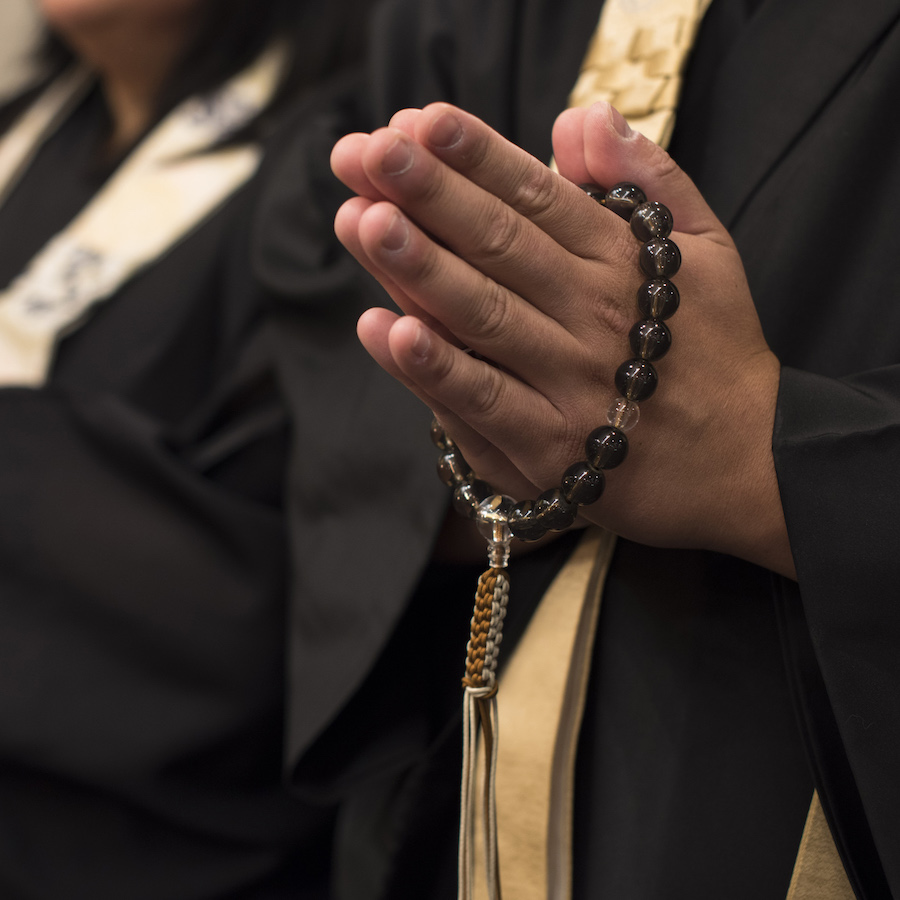
Friday, June 5th, 2009A listener posed a two-part question via our Facebook page about why there aren’t monks in the Shin tradition and how one becomes a minister. We tackle this complicated issue by going back to the beginning with a quick overview of Buddhist monastic history from Sakyamuni Buddha through the rest of Asia. Things get a bit complicated in Japan, especially when Honen and Shinran seem to turn the categories of “monks” and “laypeople” on their heads. This brings us to the second part of the questions, how one actually becomes a Shin minister. So we talk a bit about tokudo, the actual ordination ceremony, and other rites and procedures. And we wrap it with a discussion about the role of ministers in contemporary Shin Buddhism.
Podcast: Play in new window | Download (Duration: 32:41 — 37.5MB)